Posts

Showing posts with the label Book Suggestions

Required Reading for Cultural Understanding

Image
Several years ago, I sat in the court room as my husband took the oath as a new American citizen. Just prior to taking that oath, he had been told that he could change his name to anything he wanted. There was mention of dropping one of his two last names. But, as he told me later, "I just kept thinking of my mom. How could I just eliminate her from my name?" So, the change he decided to make was to place a hyphen between his two surnames. With this in mind and fresh off yesterday's discussion, I have an assignment of "required reading" for my readers. While I do not intend to change any American tradition, I do think that it offers a valuable perspective for understanding the feeling that many Latinos have about their two last names. I recommend it for anyone wishing to better understand this unique tradition. The book itself is written by a man from El Salvador -- René Colato Laínez . The name of the book is René Has Two Last Names. In the book, you ...

Last Minute Gift Idea: Book for ages 8-12

Image
Yesterday, I introduced you to the Nobel Peace Prize nominated Children's Peace Movement. Today, I have another book suggestion on this subject. While Cameron's Out of War is an outstanding book for teenagers interested in learning more about the civil conflict and peace movement in Colombia, there is another book for a younger audience. It is much less comprehensive, but it introduces the concept of the Children's Peace Movement to a younger audience. Michelle Mulder has written a Kids' Power Book entitled "Yeny and the Children for Peace." You can get it here: http://www.amazon.com/Yeny-Children-Peace-Kids-Power/dp/1897187459/ref=sr_1_18?s=books&ie=UTF8&qid=1292860531&sr=1-18

Last Minute Gift Idea: Book for Teenagers

Image
The Colombian Civil War has lasted for decades. The armed groups -- guerrilla and paramilitary and military -- have been responsible for many abuses that have often violated the human rights of ordinary Colombians. According to the United Nations, around 5,000 people lose their lives every year as a direct result of the armed conflict, and since 1985 over 3 million people have been forced to leave their homes. In 2009, this meant that Colombia had the largest number of internally displaced persons in the world -- an unfortunate and sad statistic. In 1996, the Movimiento de los Niños por la Paz -- Children's Peace Movement -- began. It started in small towns and cities as children met in round tables where they learned about and discussed their rights. This lead to a Nation Wide vote, by Colombian children, which determined the top 12 main rights that children should have. They included the right to life, the right to peace, and the right to a family that loves them. One year ...

Gift Guide -- Children's Book for Colombian/American Families

Image
My kids don't just have a grandma and grandpa, they also have an abuelito and abuelita . Neither set of grandparents live nearby, but because it is easier and cheaper to visit the grandparents, we do it more often. They also visit us. Whereas some nincompoop at the US Embassy twice denied abuelitas visa to come and visit us. (Do not get me started on Immigration!!!) She decided not to "waste more money on that" and allowed her passport to expire. The likelihood is that we will never see her here on American soil. Anyway, if you find yourself in a similar situation, you might enjoy reading the following book to your little one. In the book, we discover that Liliana's Grandmothers are very different. One lives in New England, the other lives in a South American country. (Just a reminder here that the author, Leyla Torres, is from Colombia. " Hmmm ... I wonder which country she could be referring to?") Though a trip to either grandparent's house is dif...

Ratón Pérez -- Colombia's Tooth Fairy

Image
In a Spanish tradition, mothers would give their child's baby teeth to rodents with the belief that by doing so, their children would grow up healthy. It was from this tradition that the Ratón Pérez developed. Ratón means mouse in Spanish. Ratón Pérez is the Spanish equivalent to the Tooth Fairy. He visits little children bringing money or gifts when baby teeth are left under the pillow. The story of Ratón Pérez was changed and popularized by Father Luis Coloma who wrote a story called, of all things, Ratón Pérez. You can read the story, in Spanish, here: http://cvc.cervantes.es/actcult/raton/default.htm In our house, the kids have enjoyed the following book, which helps to integrate both cultures when a tooth is lost. You can pick it up at Amazon for less than $11 US and there is potential free super saving shipping :)

Biblioburro -- Children's Book

Whenever I come across a Colombia based children's book, I am all over it. They are, after all. pretty rare. I have placed other suggestions on this blog and you can see them all by clicking on the Book Suggestions tab to the right. Today, I am going to highlight a book that is based on a true story that I saw on TV several months ago on CNN (see it here http://www.cnn.com/SPECIALS/cnn.heroes/archive10/luis.soriano.html ). It is the story of Luis Soriano , a teacher who decided to start a travelling library. He carries his books by burro to remote villages and farms in Colombia. Here is a YouTube video of a report similar to the one I saw a while back: Here is the update from the first video: Based on Luis' story, Jeanette Winter has written a children's book that is available for advance purchase from Amazon. The official release date is coming up on June 8, 2010. It looks like it will be a great addition to our growing Colombia related library. Here is a link to Amazon w...

Afrocolombian Children's Book

In 1990, Colombia celebrated the Year of Culture. As part of the festivities, the government sponsored the creation of several children's books. Among them is a book entitled " Niños de Colombia Negra ". It was written by Esmeralda Va Vliet . It consists of several chapters: #1 -- Del Congo al Magdalena -- This chapter discusses slavery and the arrival of the black slaves in Colombia at the port of Cartagena . #2 -- Los caminos de la libertad -- Talks about Benkos (Domingo) Bioho , who founded the first freed slave city in the Americas and also mentions important dates in Afrocolombian history. #3 -- Pueblos negros de Colombia -- Talks about the different regions where the majority of Afrocolombians live -- San Andrés , Costa Atlántica , Costa Pacífica , and the Valle Del Cauca . The book is now out of print, but you can read it online here: http://www.lablaa.org/blaavirtual/ninos/icanne/icanne.htm

Racism in Colombia

In preparation for this week of official celebration of Afrocolombian culture, I have read a few books. One of them I will highlight today. It is rather interesting and offers insight in to Colombian culture in general. Anyone reading this book will walk away with a greater understanding of what living in Colombia would be like. It is far more than a book dealing with race relations. You will learn about Paisa culture, mestizaje , Antioquia , the Atlantic Coast and Choco . The author challenges how the Colombian belief that the Afro population is adequately integrated into Colombian society. He questions Colombia's self proclaimed image as a "racial democracy", and offer several valid reasons as to why Afrocolombians are not truly "equal". If learning about Afrocolombians and Colombian culture in general interests you. I highly recommend this read. It is not an easy read novel, but very enlightening nonetheless. The title: Blackness and Race Mixtu...

La Madremonte Audiobook

Image
You've read my version of the story, however, if you would like to hear it in Spanish. You can purchase the audiobook at Amazon.com. h ttp://www.amazon.com/MADREMONTE-TERROR-LOS-CAMPESINOS-Spanish/dp/9588318041/ref=sr_1_141?ie=UTF8&s=books&qid=1246883144&sr=1-141

Cookbooks

Every year since 1995, an international cookbook competition has been held in Paris, France. This year 55 countries participated in what is known as the Gourmand World Cookbook Awards . The competition includes awards for 41 different categories of cookbooks and 18 drink books. To help you get an idea of how big the competition actually is, last year they were over 8,000 entries. This year, when the winners were announced, Colombia walked away with some top honors. Taking the " Best Book in the World about Non-alcoholic drinks" award, was Liliana Villegas with her book "Cafes de Colombia" (Coffees of Colombia). There was also a children's cookbook series entitled, "Cocinando Cuentos de Hadas" (Cooking Fairy Tales), that was named one of the top three most innovative cookbooks in the world. The three books in the series are called: Alicia en el país de las delicias (Alice in Delicacyland), Hansel y Gretel y la casita endulzada (Hansel and Gretel...

Colombian Mushrooms

Image
Author Gunter Pauli has developed an education model, called ZERI, that is designed to teach young children prinicples of science. Using the ZERI Fables book series, he gives children and their parents (or teachers) an opportunity to participate in hands on activities that help kids learn to use principles that they learn in the books. His hope is that children will improve their emotional intelligence, eco-literacy, and artistic/creative capacities. Why am I discussing science learning on a blog about Colombia? Well, Mr. Pauli has a wonderfully illustrated bilingual (SPANISH/ENGLISH) book in his series called: COLOMBIAN MUSHROOMS Pauli has lived and worked in Colombia, and his efforts to improve education, through an integrated approach, have caught on in Medellín and Manizales. You can learn more about his book, and the Fable series it is a part of at Chelseagreen.com. The book is probably best suited for children ages 4-8. http://www.chelseagreen.com/bookstore/item/colombian_mushroo...

What We Wish We Would Have Known

Image
It is about time for another installment of Jane's advice for people adopting a older child. So here goes and thanks Jane: Here are a few ideas from the "Stuff we wish we would had known about before adopting an older child" file: That a summer vacation isn't real life. Some of the children who are up for adoption come as guests of a summer program. Of course children on vacation are going to have a good time with their host families. But once the vacation is over, the papers are signed and real life begins, it is a shock. Be prepared for the reality. That a child's wishes may not be in her best interests. If your child wants to change her name, that's not cute. She wants to forget the past, which is impossible. Just because you have adopted an orphan doesn't mean you have to accede to every wish. If she wants to stay up late, text boys you haven't met, watch only Spanish TV, it's OK to just say "NO!" And then explain why. You'll be ...

One Family's Journey: Bring a Book

Image
I read every adoption book I could get from our public library before we got our referral. Some were helpful, some were scary and some were just dumb, but there is one book that I read that I really think shines above the rest. It's called "Parenting Your Internationally Adopted Child" by Patty Cogen. This book is not small but I brought it to Bogota anyways and I'm so glad I did because a lot of the advice was right on. It was helpful to read the book before referral but it is a COMPLETELY different experience to re-read and see Elian exhibiting the same characteristics described in the book. Lots of well meaning people will tell you "All a Child needs is love" but in my opinion that is not true. Any adopted child suffers a severe trauma when they are transferred to their new parents; this book taught me how to help him through the transition. We loved Elian long before we ever saw his face but that doesn't make us his parents in his eyes and I think th...

La Voragine -- The Vortex

Two weeks ago, I received an e-mail from an adoptive mother with a great question. "My teenage son was adopted from Colombia. I would like for him to know more about Colombia and be able to relate to other Colombians his age. Could you tell me what books Colombians read during high school and if there are English translations for the books?" I thought it was a great idea. So, here is the first suggestion -- which just happens to relate to yesterday's post. In 1924, Jose Eustasio Rivera wrote a book called "La Voragine," in English -- The Vortex. The story is about the rubber barons and their mistreatment of the Indigenous population of the Amazon. It is written in the 1st person is almost an autobiographical way. It is the story of Arturo Cova and Alicia (his love interest) and how they elope from Bogota for the Eastern jungle. It relates their experiences with the rubber barons and the massacre of San Fernando. I confess that this is not a book that I hav...

How Rubber Destroyed the Indian Communities in Colombia

The story of the indigenous groups of the Amazon is one of both sadness and hope. Sadness because the rubber trade caused the loss of 80% of the Indigenous population of the Amazon region. Entire tribes were wiped out. People were uprooted and transplanted and much of the native life and culture were lost. However, there remains hope. This hope exists because many tribes, though greatly reduced in number, have survived. They have maintained their language and have recovered their culture and their traditions. Colombia recognizes the importance of saving these tribes. But rather than talk about the present, let's look at how rubber exploitation almost destroyed the Indians of the Amazon. It all began in the late 1880's when the Peruvian, Julio Cesar Arana, started a rubber-collecting business known as Casa Arana -- later called the Peruvian Amazon Company. The company, with its main office in Iquitos, made him a multi-millionaire at the expense of the Indigenous popul...

Cumbia -- Folkloric

Image
Monument to Cumbia in El Banco , Magdalena, Colombia CUMBIA is yet another purely Colombian musical invention. Many people are familiar with modern cumbia . Fewer are familiar with the classic folkloric Cumbia , from which modern Cumbia is derived. The classic cumbia is played using the gaita hembra , gaita macho, the maraca, and drums. Classic cumbia is a Zambo (Indigenous and African mix) invention. In fact the word Cumbia comes from the African word Cumbe which meant Fiesta or Party. Cumbia can trace its start to the beginning of the 1800s -- about the time of Bolivar. The city of El Banco , Magdalena, considers itself the birthplace of Cumbia , but Barranquilla made it famous. The Cumbia is based on a 2/2 or 2/4 time signature. Initially, the cumbia was purely instrumental. But, over time lyrics were added. In the traditional cumbia dance, the women wear long flowing skirts or dresses. The blouse has 3/4 sleeves and the bodice is tightly fit to the waist. The cloth is...

A Book to Add to Your Collection

Image
Author Stephanie Sepehri has brought the Chibcha legend of Chibchacún to life for young readers. This is a must have for your growing collection of literature for your Colombian child. The book is entitled: WHY CHIBCHACUM CARRIES THE WORLD: BASED ON A CHIBCHA MYTH Purchase the book, new or used: http://www.amazon.com/gp/product/1600442153/sr=1-1/qid=1244383152/ref=olp_product_details?ie=UTF8&me=&qid=1244383152&sr=1-1&seller =

Children's Book Suggestion

Julia Durango, author of The Walls of Cartagena , also wrote a wonderful description of the life of Saint Peter Claver. If you recall my May 21, 2009, post, you will remember that Peter Claver called himself a "slave of the black slaves". He loved and served the newly arrived slaves in Cartagena in the 1600's. You and your child can learn more as you enjoy this wonderful bilingual (SPANISH/ENGLISH) book. It is called: Peter Claver, Patron Saint of Slaves/Pedro Claver, Santo Patrono de los Esclavos This book would be a great addition to your home library. It is especially great for kids 4-8 years of age. http://www.amazon.com/Claver-Patron-Slaves-Patrono-Esclavos/dp/0809166976/ref=sr_1_35?ie=UTF8&s=books&qid=1242999044&sr=1-35

Children's Book Suggestion -- The Kite Festival

Image
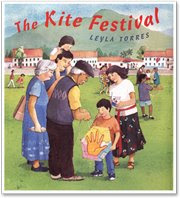
In this book, author Leyla Torres (Colombian), tells the story of a Colombian family's impromptu trip. After randomly deciding on the destination, the multi-generational family piles into the car and heads off to the town of San Vicente. When they arrive, they find that there is a Kite Festival (like the one mentioned in yesterday's post) in progess. The family has come ill-prepared for the festival and so they use their creative skills to fashion a kite. In the end, they are awarded a prize for the most creative kite. The illustrations are so wonderful. She perfectly captures Colombia and the Festival de Cometa tradition. The book is available in English and Spanish. It is probably best for Kindergarten - 3rd grade aged children. Here is a teaching guide and activities for before and after the read: http://www.leylatorres.com/pages/teaching_guides/english/ACTV_KiteFestENG.pdf You can possibly find it at your local library, request it inter-library loan, or purchase it here: I...

Excellent Book

Image
After the story of Pedro Pascasio that I shared yesterday, I wanted to recommend the purchase of a book. This book is only available in Spanish, but is truly is awesome! It is a historical fiction version of the story of Pedro Pascasio. Well researched! Great detail! Pictures! Wonderful! Title: Pedro Pascasio: Heroe antes de los doce años Author: Fernando Soto Aparicio Here is a link to Amazon: http://www.amazon.com/Pedro-Pascasio-Heroe-a%C3%83%C2%83%C3%82%C2%B1os-Spanish/dp/9583016837/ref=sr_1_1?ie=UTF8&qid=1248926450&sr=8-1