Posts

Showing posts with the label Afrocolombianos

Myths for Monday -- La Tunda

Image
The myth of La Tunda comes from the Colombian Pacific region (think Buenaventura) and is common among Afrocolombians throughout today's department -- Valle del Cauca (fondly called el Valle). It is used to scare people into behaving correctly. So, here goes: La Tunda La Tunda, when seen as herself and not in one of her shapeshifting forms, is a very ugly woman. Some people say that one of her feet is shaped like a MOLINILLO (the wooden stick used to stir chocolate in Colombia). Others say that the foot is made of the root of the tingui-tingui tree. The other leg looks like that of a child. Either way, it is not very appealing. She hunts along the coast for children who have not been baptized (los moritos), disobedient children, and unfaithful men. To each of them, she appears as their mother or another loved one and lures them into the jungle. Once in the jungle, she feeds them shrimp and crab that she farts on. Something about that fart hypnotizes her prey and makes them ...

The African Roots and Meaning of Bunde

Image
When Colombians hear the word BUNDE, most will think of the music familiar to Tolima. There is also a musical tradition called Bunde, also called Chigualo, found on the Pacific Coast. It's origins are believed to be from the Wunde of Sierra Leone, in Africa. On the Pacific Coast, the term BUNDE has come to refer to a type of song used at the wake for dead Afrocolombian children, yet it is typically not sad, but festive. (The word Chigualo is used when the song is for a deceased adult.) The Bunde is a funerary right in which the pain over the loss of a loved one is transformed into joy. The happiness is caused by the belief that the the soul of the child has entered into the Spirit World. The Bunde is sung while accompanying the the decorated casket in a processional march. The march moves three steps forward and two back. The song is followed by a brief poem: Yo soy la primer madrina (I am the first godmother) que me vengo a presentar. (I am coming to introduce myse...

First Afrocolombian President

Image
Long before the United States elected their first black President, Colombia had one. His name was Juan José Nieto Gil. But, if you ask most Colombians, they will have no idea who this guy is. The truth is that for reasons that historians can only attribute to racism, Colombia's only black president has been almost erased from history -- in fact, when his portrait was restored in the 1970's they changed his skin tone to white. Nieto Gil was born in what is now the department of Atlántico, on June 24, 1805. He was the son of a 1/2 black 1/2 Indian mother (a Zamba) and a Spanish father. Early on, he taught himself to read, and he became fascinated by political philosophy. In 1839, he was elected to the Provincial Chamber in Cartagena. In 1840, he participated in the War of Los Supremos (a topic for another blog), and was taken prisoner. In 1849, he started a newspaper called, La Democracia. He became governor of what was then called the Province of Cartagena in 1851. One y...

TUNES FOR TUESDAY -- Si Dios Fuera Negro

Image
It is Afro-Colombian week, and when it comes to music (especially Afro-Caribbean music), not being able to claim a little bit of African ancestry could be a real let down. My geneticist friends will advise me not to fret: deep inside and way in the past, we are all Africans. And they are right. I am short a few pieces of evidence, (besides the thick, black, everywhere body hair), to be able to prove that my ancestors are North Africans. Yep, the Moors who invaded Southern Spain centuries ago. But, claiming Sub-Saharan roots would be close to impossible. As I have said here before, Colombian music owes a great deal to African immigrants. The most popular rhythms that unite Colombians are sprinkled with African music -- Black African music. Some of Colombia's greatest musical artists are also black - from Joe Arroyo, Wilson Manyoma, and Piper Pimienta, to Choc Quib Town and Profetas. Their accomplishments in Colombia are remarkable especially considering that even in the hi...

That time Again -- Myths for Monday -ANANCY

Image
Over the last two years, I have dedicated this week in May to the celebration of Afrocolombian heritage. WHY? Because May 21st is the Día de la Afrocolombianidad. The day Colombia celebrates the end of slavery there in 1851. If you are interested in seeing my collection of previous posts, click here: http://raisingcolombiankids.blogspot.com/search/label/Afrocolombianos Otherwise, enjoy this week's focus on AFROCOLOMBIANOS. Starting with an AFROCOLOMBIAN myth, from San Andrés and Santa Catalina. ANANCY the SPIDER The Myth of ANANSI the spider originated in Ghana, Ivory Coast and Togo among the Ashante people, and it was people of this area that brought the story to the Americas. It is actually many different stories and there are many similarities between the Africa stories and their Colombian counterparts. Here is a Colombian version of "Tiger Stories" Once upon a time, all the the animals of the jungle gathered together to tell each other their stories of adventu...

Tagua -- The Ivory of Colombia

Image
Put an end to ivory poaching! Switch to TAGUA! Tagua is a kind of plant based ivory which is derived from ivory palms in places like Colombia. It is a sustainable alternative to animal ivory because Tagua looks like animal ivory -- with a rich, creamy color. It also acts like ivory and can be carved and worked into just about anything that would traditionally be made from ivory. An additional bonus of Tagua is that when cultivated and harvested responsibly, it can also help preserve the rainforest. Tagua is actually the seed of the ivory palm, aka the Phytelephas aequatorialis. They are found throughout the rainforests of South America, particularly on the Pacific coast of Colombia. When, thinking of a souvenir purchase, support Tagua! For that matter, support stores in your home town that offer Tagua products -- especially if those products come fron Colombia! :)

Profetas -- Make it to SXSW

Image
While I do not want to take away from Colombian Daddy's Tunes for Tuesday -- I didn't want to miss the opportunity to introduce you to another Afrocolombian musical group-- PROFETAS. While they have been around since 1997, it has only been in the last 5-6 years that their music and name has been making the rounds in such places as Rolling Stone Magazine (2006) and now at SXSW. You can read more here: http://schedule.sxsw.com/events/event_MS14089 Catch their SXSW interview below and their song Baila below in a separate post.

Best Alternative Song

A couple of weeks ago, I highlighted the Colombian musical group CHOCQUIBTOWN. Well, as it turns out, they performed on the Latin Grammy awards program last week. Not only were they asked to perform, but they won for the BEST ALTERNATIVE SONG. A Colombian love fest with the Yellow, Blue, Red flag colors lighting the stage and the group yelling "Colombia" several times. I have to say that my favorite line in the song refers to the fact that all around the Pacific Coast of Colombia everyone rides a motorcycle and that everyone in the world has cars, but the people of the Pacific. My brother-in-law, who works there, once mentioned that he had never seen more motorcycles than there are there. So, this part made me smile. You can see their Grammy performance of "De Dónde Vengo Yo" (Where I Come From) here: Here's the original video with great pictures of Choco and Quibdó: Here is a link to an article about their performance. It points out the importance of this Gramm...

Chocquibtown

Another Afrocolombian group trying to increase the self-esteem of the Afrocolombian people in the Pacific region of Colombia is the group Chocquibtown . They sing about the pride of being from the Pacific and the wonderful things of the region. You can see their video here:

El Encanto de la Ley 70

Oops! I missed it. A big sorry to all parents of children or adoptees of Afrocolombian origin. Back on August 27, the law called Ley 70 celebrated its anniversary. Law #70 guarantees protection for the ancestral territories of the Afro-descendants. It also requires that the government invest in the economic development of these areas, as well as protect their cultural identity and civil rights. This year, two girls, both born the year that the law was passed, have become the official "unofficial" voice of the Afrocolombian movement. Their names are Eidy Dayanna Estacio and Kelly Angulo, and they are the lead vocalists for the group Son Cimarrón . The group itself consists of 20 Afrocolombian youth. On October 10, 2010, the group launched its album "El Encanto de la Ley 70" (The Enchantment of the Law #70). Here is an interview and examples of the music that the group sings:

One Family's Return Trip: Afrocolombian Hero

Image
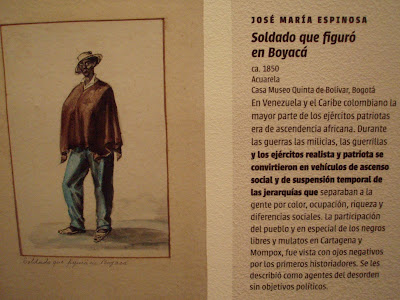
Colombian Law #70 passed on August 27, 1993. Law #70 is also called the “Law of the Black Communities”. It is considered one of the greatest achievements of the Afro-Colombian civil rights movement. Read more here: http://raisingcolombiankids.blogspot.com/2009/08/anniversary-of-law-70-celebrating-16.html Since today is the anniversary of the passing of this law, I thought I'd share what we learned yesterday at the Museo Nacional about the role of Afrocolombians in Colombian Independence. Here is a translation: In Venezuela and the Colombian Caribbean region, the majority of the patriot army was of African descent. During the wars, the militias, the guerrillas, and the armies (both royalist and patriot) became vehicles for social climbing and the temporary suspension of hierarchies that separated the people by their race, occupations, affluence and social differences. The participation of the people, and particularly the free blacks and mulattoes (mixed race) peoples in Cartagena...

How are you celebrating the Día de la Afrocolombianidad?

Image
Happy Día de la Afrocolombianidad!!! I have asked the adoptive parents of Afrocolombianitos how they plan to celebrate today's holiday. Here is their response: Johnsons -- USA In honor of the Dia de Afrocolombianidad we'll be celebrating 2 things...we got our referral call for Ava on May 20th, just one day before el Día! So we're going to celebrate that call and Ava's heritage. :) Pete and I hope to learn so much more as our children grow older so that our celebration of Ava's unique heritage goes beyond just one day, but I have to say honestly, we don't know much about Afrocolombian history. Our goal this year is to create a timeline of the history of Africans in Colombia (mostly to keep my husband and I accountable to learn/research) and let the girls color it and talk briefly about Ava's country and heritage with both girls. We're taking them to a local park that has a LARGE map of the world painted on the ground with fountains to play in on top of i...

Afrocolombian Children's Book

In 1990, Colombia celebrated the Year of Culture. As part of the festivities, the government sponsored the creation of several children's books. Among them is a book entitled " Niños de Colombia Negra ". It was written by Esmeralda Va Vliet . It consists of several chapters: #1 -- Del Congo al Magdalena -- This chapter discusses slavery and the arrival of the black slaves in Colombia at the port of Cartagena . #2 -- Los caminos de la libertad -- Talks about Benkos (Domingo) Bioho , who founded the first freed slave city in the Americas and also mentions important dates in Afrocolombian history. #3 -- Pueblos negros de Colombia -- Talks about the different regions where the majority of Afrocolombians live -- San Andrés , Costa Atlántica , Costa Pacífica , and the Valle Del Cauca . The book is now out of print, but you can read it online here: http://www.lablaa.org/blaavirtual/ninos/icanne/icanne.htm

Racism in Colombia

In preparation for this week of official celebration of Afrocolombian culture, I have read a few books. One of them I will highlight today. It is rather interesting and offers insight in to Colombian culture in general. Anyone reading this book will walk away with a greater understanding of what living in Colombia would be like. It is far more than a book dealing with race relations. You will learn about Paisa culture, mestizaje , Antioquia , the Atlantic Coast and Choco . The author challenges how the Colombian belief that the Afro population is adequately integrated into Colombian society. He questions Colombia's self proclaimed image as a "racial democracy", and offer several valid reasons as to why Afrocolombians are not truly "equal". If learning about Afrocolombians and Colombian culture in general interests you. I highly recommend this read. It is not an easy read novel, but very enlightening nonetheless. The title: Blackness and Race Mixtu...

San Basilio de Palenque

Here are a few other resources to learn more about San Basilio de Palenque. The Youtube piece is in English. http://www.semana.com/noticias-cultura/400-anos-independencia/137450.aspx

Benkos Bioho and the Cimarrones

When the Spanish began to bring slaves from Africa to Colombia, there were some who escaped and began to form free, outlaw communities. These escaped slaves were called Cimarrones , and their communities and their enclaves were known as Palenques . Benkos (called Domingo by the Spanish) Bioho is the most famous of all Cimarrones. He arrived in Cartagena de Indias in 1599, where he became the slave of Juan Gómez. The historian Fray Pedro Simón (1574-1628) wrote Benkos Bioho's story in his epic work. According to Simón, the mistreatment of slaves by Gómez led Bioho to rebel and flee his master taking with him his wife, three other men and three other women. He also encouraged an additional 22 slaves, owned by Juan de Palacios, to rebel and flee with them. The group of 30 headed out into the swamps and camped near the village of Tolú -- around 50 miles away. From there, Bioho organized the group into a guerrilla type movement, and for five years the group launched attacks on Spanish i...

Antonia Santos Plata

Image
Antonia Santos Plata was born in Charalá (in what is today the department of Santander) in 1785. While little is known of her early life, she came to the forefront in 1819 during the time of the Independence movement. She helped to organize guerrilla operations from her family home in El Hatillo, where she helped to provide supplies, direct counter-attacks, and encourage others to join them. She was part of a group known as the Guerrillas of Coromoro (approximately 40 people most of whom were her relatives that she herself had organized). The groups operations were designed to help Bolivar cross the Andes. Captain Pedro Agustín Vargas (of the Spanish army) arrived at El Hatillo and found Antonia Santos there with her 15 year old niece, Elena Santos. Together Antonia and Elna as well as their two slaves, Juan and Juana, were arrested and taken to Charalá on foot and imprisoned. She was sentenced to death by the Viceroy Juan Sámano and was executed on July 28, 1819. According ...

Balseadas de Santos

Image
Okay, so I really meant to post this the first week of January, as the event is held from January 1-6 every year, but the move really threw me for a loop. So, now that this event is over, I'll give you a run down so you can look forward to it for next year. On the Pacific coast of Colombia, there is a unique tradition popular among Afrocolombians. It is called the Balseadas de Santos . The Balseada is actually a procession of canoes, accompanied by a chorus of drums. In the procession, the canoes carry the statues of Catholic saints down the river to where a village or city is located. Then, the canoes come to shore and the statue is carried to the home of a family that has been chosen to sponsor the "partying" all year long. The party then begins. There is marimba music and the woman at the head of the household will begin singing and dancing. The festivities last for several days. These balseadas are held on the Sanquianga river in the cities of Bocas de Satinga, Mulato...

Cumbia -- Folkloric

Image
Monument to Cumbia in El Banco , Magdalena, Colombia CUMBIA is yet another purely Colombian musical invention. Many people are familiar with modern cumbia . Fewer are familiar with the classic folkloric Cumbia , from which modern Cumbia is derived. The classic cumbia is played using the gaita hembra , gaita macho, the maraca, and drums. Classic cumbia is a Zambo (Indigenous and African mix) invention. In fact the word Cumbia comes from the African word Cumbe which meant Fiesta or Party. Cumbia can trace its start to the beginning of the 1800s -- about the time of Bolivar. The city of El Banco , Magdalena, considers itself the birthplace of Cumbia , but Barranquilla made it famous. The Cumbia is based on a 2/2 or 2/4 time signature. Initially, the cumbia was purely instrumental. But, over time lyrics were added. In the traditional cumbia dance, the women wear long flowing skirts or dresses. The blouse has 3/4 sleeves and the bodice is tightly fit to the waist. The cloth is...

Miss Colombia -- Afrocolombiana

Image
Yesterday, I got an question about whether or no there has ever been an Afrocolombian Miss Colombia. I am proud to say that YES there has been! Her name is Vanessa Alexandra Mendoza Bustos. She was Miss Choco and won Miss Colombia 2001. She represented Colombia at the Miss Universe pageant and won the award for best native costume. You can see her in her costume in this video. http://www.youtube.com/watch?v=1pZcpYcs-Cc Born in the small village of Ungia as one of 16 children. Her father died when she was young and she was raised by her mother. Before becoming Miss Choco and then Miss Colombia, Mendoza was a model. Photo: http://commons.wikimedia.org/wiki/File:VanessaMendoza.jpg