Posts

Showing posts with the label Cuisine

Borojó

Image
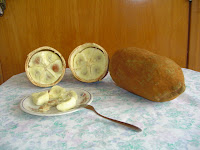
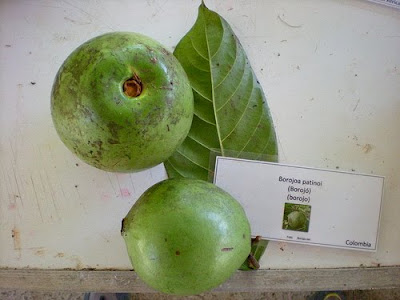
In some parts of Colombia, particularly along the Pacific Coast in El Chocó and Valle, there grows an interesting fruit -- BOROJÓ . The fruit itself is green and about the size of a softball. It grows on trees that are anywhere from 9-15 feet tall. The fruit is highly nutritious. It offers a good source of protein, vitamin B and phosphorus. Research conducted at a Colombian university shows that it contains a substance that can inhibit the growth of cancerous tumors. I got to try the fruit for the first time on our recent trip. People make drinks out of the pulp, which tastes good at first, but has an aftertaste of rotten cheese. I personally couldn't drink it after a few sips. Colombians believe it helps with bronchial infections and it is also considered "nature's viagra ". Photo: http://www.flickr.com/photos/jeandrapp/3734238858/sizes/m/in/photostream/

La Papa -- The Potato

The Conquistador Gonzálo Jiménez de Quesada wrote an account of his conquest of Nueva Granada -- what is now Colombia -- called Historia General de las Indias . Unfortunately, this record has been lost. There does remain, however, several writers from the late 1500's and early 1600's who did have access to his record and used it as a basis for their own records of the conquest of America. One of these men was Juan de Castellanos . Castellanos came to the Americas in 1545, landing in Cartagena . Eventually he became the priest of Tunja . There, using Jiménez's work as a base, he wrote his epic poem, Elegias de Varones Ilustres de Indias . The first part of which appeared in Spain in 1588. In his poem, he writes of the first encounter of the Spanish in Nueva Granada with the potato, which occurred in 1537. ... they entered into the large villages of Sorocotá , and all were deserted... even though their houses were all filled with corn, beans and truffles (to ...

One Family's Return Trip: Mandatory Last Stop

Image
Our mandatory last stop in Colombia is always Crepes and Waffles. It has just become a tradition. Amazingly, there is now a Crepes in El Dorado airport -- how convenient after the short flight from Cali and before a long one to the US. Crepes not only has delicious food, but they have a very interesting work force. Most of their employees are women and single mothers. In a time in Colombia where many businesses refuse to hire single moms, Crepes and Waffles promotes it. As far as ordering, I am a rut kind of person. If I'm ordering something once and I like it, I order the same thing every time. . My Crepes favorite is the Panne Cook with chicken and spinach. I love it :) especially with the Limonada. My sister-in-law is just the opposite, I think she likes to try something new every time. She ordered the Pita Vegetariana. It looked delicious and she raved about it! If you have tried Crepes and Waffles, what is your favorite menu item? If you are looking forward to your first expe...

One Family's Return Trip: Buying From Street Vendors

Image
When I went to live in Mexico for study abroad, oh so many years ago, our teacher/advisor told us to avoid getting sick by not eating from street vendors. I diligently obeyed. However, my husband convinced me, on our first trip to Colombia, that some food can safely be eaten. I began to try Mango biche, arepas, roasted corn, and all sorts of food. I have never gotten sick from street food, well except for my trial of sugar cane -- that made me really sick ;). On our last night in Valle, on our way back from the Coffee park, we bought the most delicious arepas de peto right off street. Just thinking about them makes my mouth water. Don't be afraid of eating these delicious treats from a street vendor :)

One Family's Return Trip: Empanadas Vallunas

Image
From the NOT TO MISS CUISINE files, comes the delicious Empanada Valluna. They are different from the Empanadas that my mother-in-law makes. For those, you can use the following link to her recipe: http://raisingcolombiankids.blogspot.com/2008/12/abuelita-carmens-colombian-empanadas-de.html . The Valluna version of the empanada are equally as delicious, but they taste different. They have meat and potatoes like those I was familiar with, but the spices are different. The woman that made them told me she uses tomillo (thyme) as one of the spices. This spice was definitely not on the list for my MIL's empanadas. These deep-fried delights are really not to be missed if you want to have a truly cultural Valle experience. Here is the recipe -- as with any recipe in Colombia -- no one knows how much of anything to use. I hope to test this out in the future, but for now, if you give it a try, and it works out, let me know the measurements you used: STEP #1 -- Prepare the MEAT In about 8...

One Family's Return Trip: Cali Restaurant Suggestion

Image
I wish that this picture were as good as the breakfast we ate at KUTY. KUTY is a PANADERÍA (bakery), and so much more. Actually, it originally opened its doors in 1975, when a pair of sisters decided to try their hand at bread making in Junín. Now, there are new owners and 4 locations in Cali. We visited the one on la Avenida Sexta con 27. It is like a small cafeteria with tables outside. We ordered their signature dish -- omelets. Whatever you decide to order, don't forget to try their Pan de Bono. If you don't want to leave your hotel, you can order in 524-3040. There are actually 2 KUTY restaurants in Bogotá, one right near the Plaza de Bolívar -- Carrera 8 No. 15 -96. So, even if you never make it to Cali. You can get a breakfast Caleño.

One Family's Return Trip: El Corral

Image
"Just a bit of Heaven!" That is what my nine year old called our lunch at El Corral. Just one block East from the Museo 20 de Julio on the Calle 11, you'll find a Juan Valdez coffee shop (on the corner of Carrera 6 with Calle 11). If you go up the stairs to the 2nd floor, you'll find El Corral Gourmet. In this case, Gourmet means you pay A LOT more for the food and you get to eat it in fancy containers :). The regular El Corral restaurants are quite economical, so make sure you read the sign carefully before entering if you are on a budget. Anyway, we were starving, and after several weeks of eating Colombian food, the boys wanted burgers, fries and chocolate shakes. Since there is nothing in the world like El Corral Chocolate shakes, we bought one for everyone. The restaurant is located in the building known as the "Centro Cultural Gabriel García Márquez" The Centro houses the bookstore of the Fondo de Cultura Económica . If you ever plan to read books to ...

One Family's Return Trip: Carne a la Llanera

Image
The Llanos Orientales (the departments of Casanare, Arauca, Meta) are large, flat grasslands famous for their cattle and cowboys. Another tradition is the Llanero style BBQ. These Llanero style BBQ restaurants can be found all over Colombia, and the meat is spectacular. Most places allow you to order a BANDEJA with beef and pork. It comes with fried potatoes and yucca. Give it a whirl! Definitely finger-licking good!

One Family's Return Trip: The Corner Store

Image
In Colombia, on nearly every street there is a corner store -- TIENDA. They are filled with candy, gum, chips, sodas, beer, bread, matches, and all sorts of odds and ends. These are like magnets for Colombian children. That is a problem for parents wanting their kids to eat healthy while visiting cousins that are used to eating tons of GALGUERÍAS (junk food). After many, many NOs, the boys finally wore us down -- Cokes, Patacones (plantain chips) and Chicken flavored potato chips. This is an important cultural note. There are some "Can't really say you've been to Colombia, unless you've tried them." Galguerías. Below, is our list. Feel free to add your favorite. #1 Chocolatina Jet: Inside the wrapper you will find a sticker. You can purchase a book for about $3 where all of the stickers go. The book then serves as a kind of picture encyclopedia. #2 Papas Fritas Margaritas: It is well worth trying the POLLO (chicken) and LIMON (lime) flavored varieties of Papas ...

One Family's Return Trip: Buying Bread

Image
My husband jokes that being Colombian means that you could never do the Atkins diet because rather than an all protein diet, you are pretty much on the all carbohydrate diet. Not a lunch is served without rice, not a breakfast without arepa and/or bread. But, not the milquetoast sliced bread we buy here -- NOOOOOO ! It has to be the fresh, baked within the last hour kind. In fact, though sliced bread is available at stores like Carrefour or Carrulla . DO NOT BUY IT! It is dry and gross. Only good for toast, and not many people have toasters. Back to the bread. In smaller cities, there are PANADERÍAS everywhere. In Bogotá they are harder to find. But, they smell delicious!!! Your nose can literally lead you to them. You can know that you have found a good one if there are lots of people buying bread there. In some cases, the bread is behind glass containers and you tell the workers which kind you want. In others, like the one pictured here, you grab a basket or tray, a pair of tongs,...

One Family's Return Trip: Participating in the Informal Economy

Image
A few weeks ago, I posted about the informal economy of Colombia. You can read more here: http://raisingcolombiankids.blogspot.com/2010/07/one-familys-return-trip-bogotas.html Little did I know that I would get a chance to participate in it when I wrote the post. I have a niece that recently lost her job and is struggling to support her 2 children. So, she decided to sell Arepas del Horno on the street. This kind of job is called the " rebusque ". It roughly means doing anything to earn money. The arepas she sells are traditional in Tolima where she grew up, but have never been seen in Sogamoso , Boyaca . The arepa dough is cooked in a clay oven in little metal tins called a " paila ". The cooked arepa is then removed, cut in half and a slice of cheese is added which melts from the heat of the recently cooked arepa . They are truly delicious!! Since we were in Ferias y Fiestas, there were a lot of people looking for food on the street, so she needed help ta...

Maíz pira -- Popcorn

Image
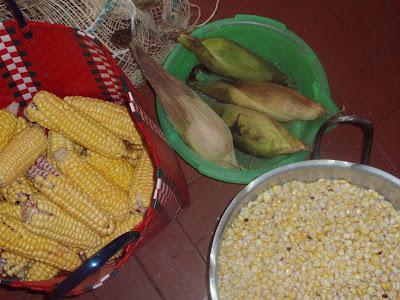
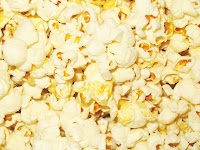
As almost everyone knows a good movie can be made better with the addition of POPCORN. That delight, which can trace it's roots to the native peoples of the Americas, is more than just a movie snack in Colombia. Let me illustrate My husband and I were married in the US, and less than 5 days later, we embarked on our extended honeymoon to Colombia. My third day in country found me sitting at the dinner table in his family's home. It was actually my second day in Sogamoso (located in the department of Boyacá ). We had done some sightseeing during the day, which had included quite a bit of walking, and as dinner time rolled around I was feeling pretty hungry. I remembered that lunch was the big meal in Colombia, but I had hoped for some delicious lunch leftovers for dinner. Strike one. My husband cheerfully pointed out that most Colombian families don't believe in giving leftovers to guests, unless they can be reworked into a new meal like CALENTADO (a story for another day)...

Ancas de Rana o Pollo

I have to admit that trying to find a recipe from the Amazons that was possible to actually make outside of the Amazon has been difficult -- since access to Boas, Monkeys, Manatees, Frogs, Snails, and Turtles isn't exactly an easy task. My mother suggested that I give you the frog recipe -- and since frog tastes a lot like chicken -- you might substitute frog legs for chicken legs. The recipe: Step #1 Clean the legs and rub them with lime juice. Step #2 Fry them in oil without salt, until golden brown. Step #3 Place on a paper towel, let drain and serve. Simple, but worth a try.

Unusual Fruit -- NOT TO MISS CUISINE

Image
Long before I met my husband, I spent 18 months living in Toronto, Canada. Most of the people I lived and worked with were from Latin America. I remember that one of the families I knew was from Colombia. On their wall was a large poster of the many different fruits of Colombia. Dozens of fruits that seemed completely unfamiliar. I remember thinking that it would be great to try all of them. And now, having tried many of them, I must recommend that you try some too. The fruits are definitely one of the NOT TO MISS CUISINE items of Colombia. This week, with the focus on the Amazon regions of Colombia, I thought I would spotlight some of the amazing fruits of the region. Seje -- found in the Amazon and Pacific Coast regions. This fruit is most similar to a date and is the size of a marble. It is cooked before serving. Unfortunately, I could not find a picture of this fruit. Copoazu -- (Theobroma grandiflorum) -- This fruit is a relative of the cacao and its seeds can also pr...

La Familia López's Arroz con Coco

Image
One of the first Colombian dishes I ever tried was Arroz con Coco. I actually tried this dish while living in Toronto, Canada -- five years before I even met my husband. I met a family from Cartagena and they invited me to dinner -- on the menu -- Arroz con Coco. I liked it so much I asked for the recipe. I will now share it with you. INGREDIENTS: 2 cups of long grain white rice 1 cup of raisins 4 Tablespoons sugar 1 cup butter Sal to taste 3 cups of coconut milk from a can 2 more cups coconut milk which should be from fresh coconuts that you grate, add a little water, and squeeze out the milk yourself through a strainer . This is called the PRIMERA LECHE. Step #1 In a pot, put the PRIMERA LECHE and cook until it boils down and turns golden. Step #2 Add raisins, sugar and a little butter. Mix and add the coconut milk. Step #3 Bring to a boil and add rice and a pinch of salt. Let the mixture boil down until the grains of rice are just starting to be visible. Step #4 Turn the he...

Chicha Caribeña -- Not to Miss Cuisine

While on the Altiplano Cuniboyacense Chicha is a fermented drink, in Cartagena CHICHA is any fruit drink that is NOT fermented. These are like the Liquados of Mexico. These drinks are available throughout the city and are made with any number of fresh fruits, which are blended with water and sugar. Here is a short list of some of the CHICHA you can try while in Cartagena . Anón Cerezas - Cherries Corozo - a nut from a palm tree Guanábana Guyaba - Guava Mamón or Mamóncillo Mango Marañón Papaya Piña - Pineapple Tamarindo -- which is considered the best Uvita de Playa -- Beach grapes Zapote And more Many of the fruits of Colombia are virtually unknown in the rest of the world, and they are truly delicious. Giving them a whirl is well worth the money and you could try a new one every day!

Rondón or Rundown -- Not to Miss Cuisine

Image
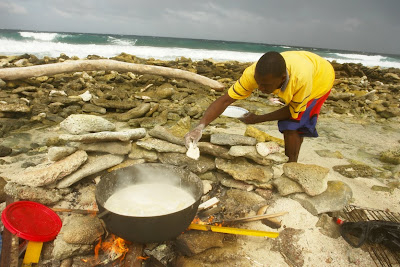
One of the classic dishes of the Islands (San Andrés, Santa Catalina and Providencia) is Rundown or Rondón. Using coconut milk as the broth base, you add snail, pig tail, and fish (sometimes shrimp, crab or lobster are added) as the meat. You also add to the meat green plantains, yuca, breadfruit, yams, dumplings and spices. It is usually cooked outside and most often on the beach in a large pot over an open fire. This unique and VERY typcial dish is well worth a whirl if you get a chance to visit San Andrés while in Colombia * Photos http://www.flickr.com/photos/maqroll/2203197615/in/photostream/ http://www.flickr.com/photos/maqroll/2203991330/in/photostream/

Not to Miss Cuisine - Asado Huilense

The most typically food associated with the Festival de San Pedro (Festival Folclórico de Bambuco ) in Huila is the famous ASADO HUILENSE or Hulian Bar-B-Q. Though each family probably has its own take on the amount of spices and the kinds of spices used, however, the overall idea and taste of the Bar-B-Q is the same. You can use some or all of the following ingredients: Carne de cerdo -- Pork Cerveza -- Beer Spices: Ajo -- Garlic Pimentón -- Green Pepper Cebolla larga -- Green onions Laurel -- Bay leaf Tomillo -- Thyme Yerba buena -- Spearmint Albahaca -- Basil Cilantro Poleo -- Pennyroyal (a kind of mint plant) Oregano Naranja agria -- Bitter orange Nuez Moscada -- Nutmeg Canela -- Cinnamon Sal -- Salt Pimienta -- Pepper The pork is marinated in the beer/spice marinade for at least 24 hours. Then, you put it in a clay tray and place it in the oven -- they use a brick and clay oven. Look at the cool video: http://www.youtube.com/watch?v=Wa9XKdoOmh0 I couldn...

Drinks of the Costa Pacífica

Image
One of the most unique aspects of food from the Pacific coast is the large variety of drinks that they have. Each department seems to have their specialty drink. CHOCOLATE CON LECHE DE COCO -- from Chocó . For this coconut chocolate milk, you take 8 bars of Colombian chocolate, 2 cups of coconut milk from freshly opened coconuts, 4 cups of milk, and sugar to taste. First, melt the chocolate in the coconut milk on low heat. Mix constantly with a hand mixer (molinillo). When the chocolate is completely melted, add milk and sugar and stir until they are dissolved. JUGO DE NAIDÍ - from Guapí, Cauca The naidí (nigh DEE) is more commonly known in the U.S. as the acai fruit. They come from palm trees where they grow in bunches, like grapes. They start out green and turn a deep reddish-purple when they ripen. To prepare a delicious drink from the fruit, you place the ripe berries in a pot of water that just covers the berries, and then boil on high for about 30 minutes (add water if necessary...

Lechona Tolimense -- Not to Miss Cuisine

Image
When talking about the food of Tolima , there is probably nothing more Tolimense than their signature dish -- LECHONA . In fact, the production of Lechona for fiestas in Tolima dates back several centuries. It really IS what's for dinner in Tolima at just about any big celebration -- weddings, baptisms, Christmas, New Year's etc. What is Lechona ? In a few words, stuffed roasted pig. How is it made? First, you take the 50 pound pig and debone it and clean it out --making sure to leave the skin intact. Next, you take all of the ribs and meat and chop them up with an axe and add them to about 10 pounds of pork meat (cut in small chunks) and marinate ( adobar ) it all in a mixture of garlic, green onions, cumin, salt and pepper. Then, you cook the meat in lard. You also prepare rice, peas, and potatoes to add to the mixture. When all the stuffing ingredients are mixed together, you stuff the pig and then sew it up. You cover the skin with bitter orange juice and cook it all ...